

Commercial Heating Controls Upgrades in Kent: How Smarter System Optimisation Can Reduce Energy Waste

If you are searching for commercial heating controls Kent businesses can rely on, you are probably not looking for a cosmetic upgrade. In many commercial buildings, the boiler plant itself is only part of the story. Energy waste often comes from poor scheduling, weak zoning, outdated sensors, badly set temperatures, or controls that no longer match how the building is actually used.
At Heat-Tec, we help commercial clients across Kent review heating performance in practical terms. From our Beckenham base, we assess how boilers, pumps, valves and controls work together, then recommend sensible improvements that can reduce waste, improve comfort and make systems easier to manage.
For offices, schools, care homes, restaurants, retail units, warehouses and industrial facilities, a smarter control strategy can be a more proportionate first step than rushing straight into full plant replacement. The key is knowing what to change, and why.
What commercial heating controls actually do
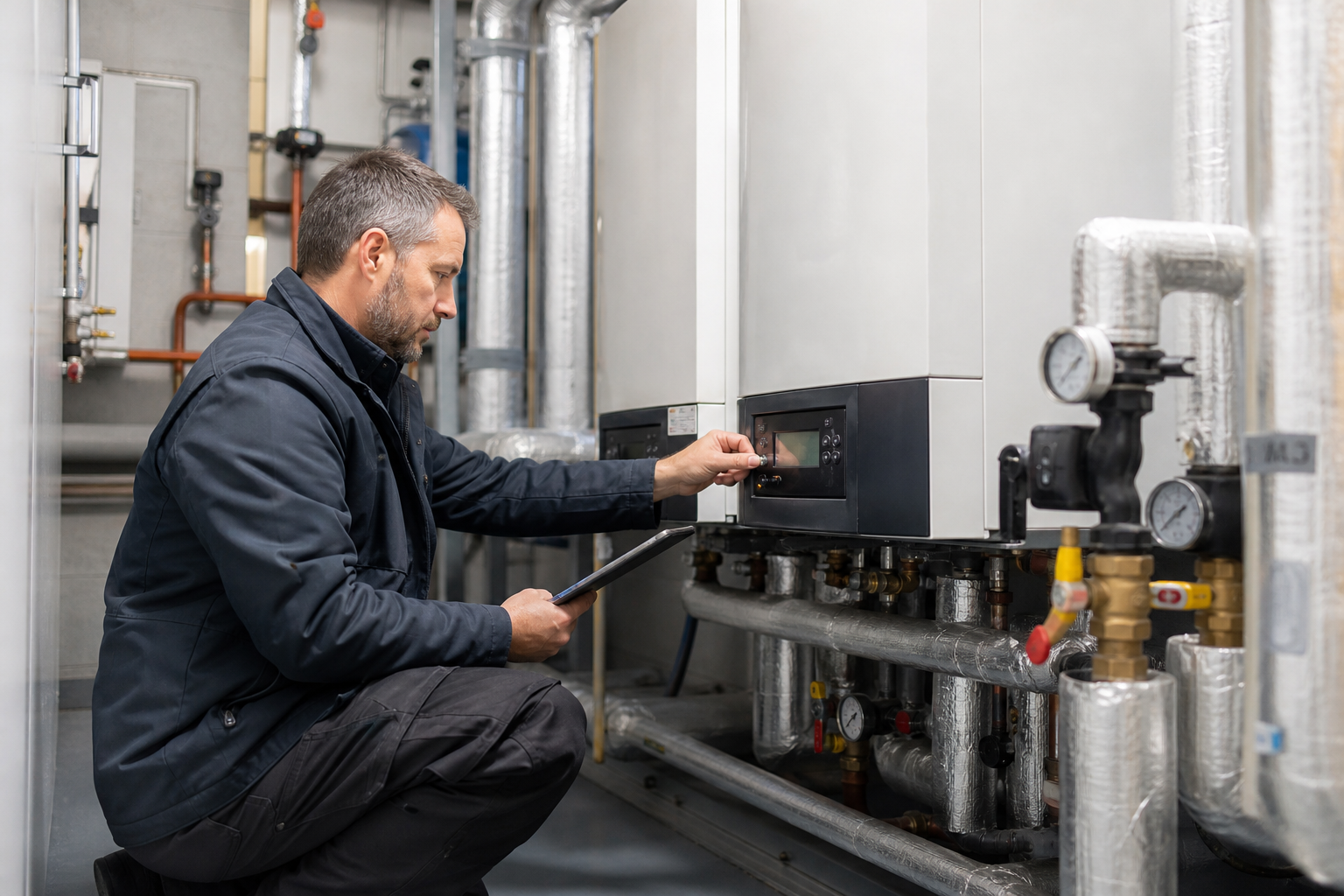
Commercial heating controls are the decision-making layer of the system. They determine when heat is generated, where it goes, how long it runs, and how the plant responds to changing demand.
Key functions that affect energy use
Start and stop times for heating and hot water
Temperature targets for different parts of the building
Zoning, so areas are heated according to actual use
How boilers are sequenced when there is more than one unit
How pumps and valves respond during operation
How the system reacts to changes in occupancy or outside conditions
When these elements are configured well, the system can respond more accurately to the building. When they are not, boilers may fire longer than needed, pumps may run unnecessarily, and some areas may be overheated while others remain cold.
Why outdated controls create avoidable waste
Many commercial sites still run on control logic that suited the building years ago but not now. Occupancy patterns change. Parts of the premises may be repurposed. Opening hours shift. Extensions are added. Different tenants or departments may use the building in completely different ways.
If the controls have not kept pace, energy waste becomes normalised. Staff work around hot and cold spots, temperatures are adjusted manually, and the heating bill climbs without a clear explanation.
Commercial heating controls Kent businesses should review before waste builds up
Controls issues do not always show up as a dramatic breakdown. More often, they appear as smaller operational frustrations that gradually increase running costs.
1. The heating comes on too early, stays on too late, or runs in empty areas
A simple timeclock may no longer reflect current occupancy. If a building is heated before staff arrive, after they leave, or in little-used zones, the system may be burning fuel without delivering commercial value.
2. Occupants keep reporting hot and cold spots
Uneven comfort can point to zoning problems, poor sensor location, valve issues, or an imbalanced system. Repeated temperature complaints are often a controls problem, not just a boiler problem.
3. Your plant is being adjusted manually on a regular basis
If site staff have to override settings constantly to keep the building comfortable, the system is not doing its job properly. Good controls should support day-to-day operation, not depend on repeated workarounds.
4. Energy costs are rising but obvious faults are limited
When the plant is still running but bills keep climbing, it is worth looking beyond breakdowns. Inefficient set points, poor sequencing, or unnecessary pump operation can all increase consumption without triggering a major alarm.
5. The controls no longer match the complexity of the building
As sites change, older controls can become too basic. A single heating schedule may be unsuitable for a building with mixed-use areas, varying occupancy, and different hot water or comfort requirements.
What a smarter controls upgrade can include
Not every building needs the same solution. The right upgrade depends on the age of the plant, the layout of the premises, operational priorities, and how much visibility your team needs.
Better scheduling and zoning
One of the most common opportunities is improving time and temperature control across different areas. Instead of treating the whole site the same way, zones can be scheduled around actual use.
Office areas may need different timings from warehouse space.
Meeting rooms or customer-facing zones may need closer temperature control.
Areas used only occasionally may not need full heating throughout the day.
This more targeted approach can reduce unnecessary runtime while improving comfort where it matters most.
Sensors, compensation and sequencing
Smarter control strategies may also include better use of sensors and plant sequencing. Depending on the system, that can mean reviewing room sensors, flow and return temperature control, outside-temperature response, and how multiple boilers are brought on and off line.
These details matter because commercial heating systems rarely operate efficiently when they are stuck in a one-size-fits-all pattern. The aim is to match output more closely to actual demand.
Usability for your site team
A technically capable system is not enough if nobody on site can operate it confidently. We often see buildings where settings have been altered over time because the control interface is unclear or poorly commissioned.
Part of effective optimisation is making sure the controls are understandable, logical, and practical for the people who use them. That helps reduce accidental overrides and keeps performance more consistent.
Why optimisation matters as much as new equipment
Businesses sometimes assume that efficiency improvements always start with major replacement works. In reality, controls optimisation can be one of the most sensible ways to improve performance when the existing plant is still serviceable.
When controls may be the better first step
If your boilers are fundamentally sound but the system response is poor, upgrading controls may offer a more measured route than immediate replacement. It can address waste at source by improving how heat is generated, distributed, and timed.
That is especially relevant on sites where:
the heating plant has been added to in stages
occupancy patterns have changed over time
different parts of the building have different demands
staff regularly complain about inconsistent temperatures
the plant room works, but not as efficiently or predictably as it should
Where controls fit into a wider plant room strategy
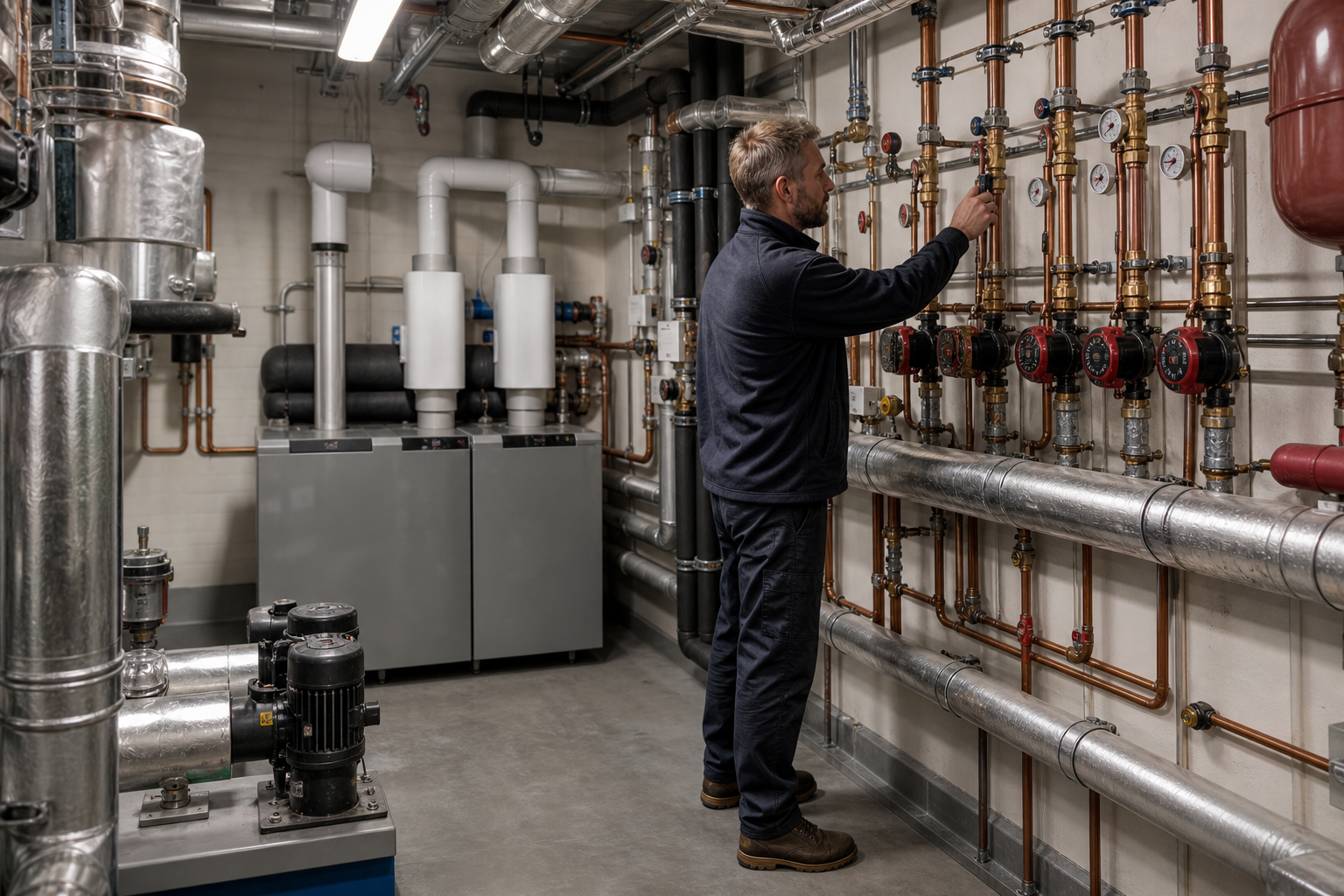
Controls should never be looked at in isolation. Pumps, valves, boilers, hot water systems, and distribution all influence results. That is why we approach upgrades as part of the wider system, not just as a panel on the wall.
If your site also needs broader improvement work, our commercial boiler and heating services can support surveys, remedial work, and phased upgrade planning. For more extensive projects, controls improvements may sit alongside plant room installation and refurbishment work to improve overall system performance.
How Heat-Tec approaches commercial heating controls projects
At Heat-Tec, we support businesses across Kent with installation, servicing, repair, and maintenance of commercial heating systems. We are based in Beckenham, and our team works with offices, retail units, schools, care homes, restaurants, warehouses, and industrial facilities.
Established in 1999, we focus on practical recommendations that reflect how the site actually operates. Our engineers are Gas Safe registered, and we also provide planned preventative maintenance, safety inspections, plant room improvements, hot water systems, and wider system optimisation.
A practical site survey
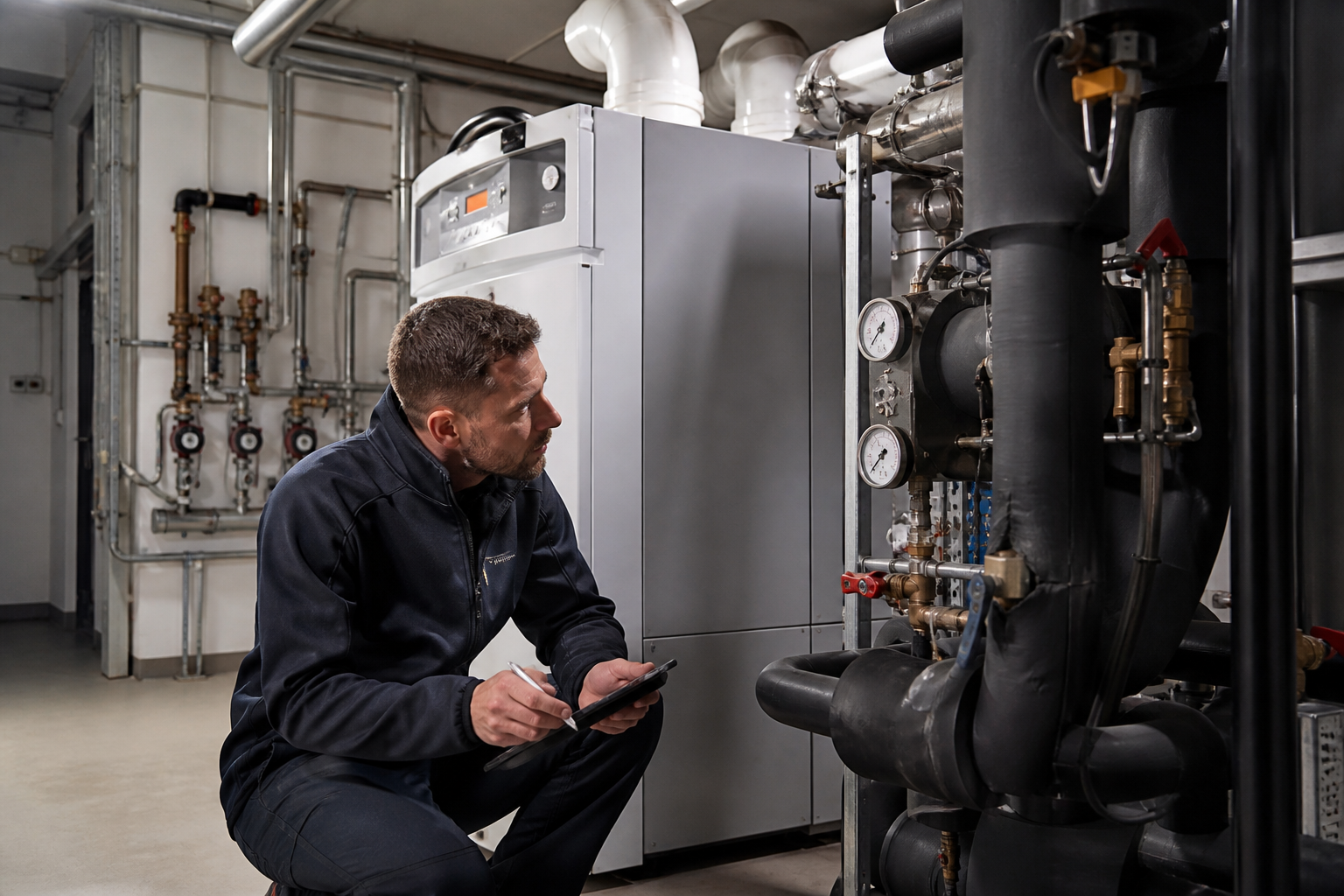
A useful controls review starts on site, not with guesswork. We look at the building layout, occupancy pattern, existing plant, known problem areas, operator experience, and any signs of unnecessary runtime or uneven heating.
We also consider whether the issue is primarily controls-related or part of a wider mechanical problem. That distinction matters, because a better controller cannot compensate for every underlying fault.
Recommendations based on your building
Different premises need different priorities. A school may need reliable scheduling around term-time use. A care home may need tighter comfort control. A warehouse may need a different strategy again from customer-facing areas or offices.
Our goal is to identify the upgrades that are proportionate and commercially sensible for your site, whether that means targeted controls changes or a broader optimisation plan supported by our planned preventative maintenance and servicing support.
Installation, testing and ongoing performance
Once upgrade work is agreed, proper setup matters. New controls need correct commissioning, testing, and handover if they are going to deliver long-term value. We focus on making sure the system is not only installed, but configured in a way that supports day-to-day operation.
That practical approach helps site teams gain more visibility, fewer workarounds, and a heating system that is easier to manage.
Frequently asked questions about commercial heating controls in Kent
Can we upgrade commercial heating controls without replacing the boiler?
Often, yes. If the existing boiler plant is still serviceable, controls upgrades can sometimes be carried out as a standalone improvement or as part of phased optimisation work. The right approach depends on the condition of the wider system.
How do I know if outdated controls are wasting energy?
Common signs include heating running outside occupied hours, persistent hot and cold spots, regular manual overrides, rising energy costs without major faults, and zones that do not reflect how the building is actually used.
Are controls upgrades suitable for older commercial buildings?
They can be. Older buildings often benefit from better zoning, revised scheduling, and improved system responsiveness. A site survey is the best way to understand what is realistic for the existing plant and layout.
Do smarter controls help with comfort as well as efficiency?
Yes. A well-optimised system should not just reduce waste. It should also improve consistency across the building, helping to reduce overheating, underheating, and repeated occupant complaints.
What happens during a Heat-Tec site visit?
We assess the existing plant, controls setup, building use, and reported issues, then identify practical next steps. That may involve targeted controls upgrades, wider system optimisation, or further plant room improvement work, depending on the site.
Arrange a site visit with Heat-Tec
If your building is running on outdated settings, inefficient schedules, or controls that no longer suit the site, now is the time to review them. The right upgrade will not be the same for every premises, but a clear assessment can show where energy waste is creeping in and what practical improvements are worth making.
To discuss commercial heating controls Kent businesses can rely on, arrange a site visit with Heat-Tec. Call us on 020 8212 7824, email enquiries@heat-tec.com, or visit our website to tell us about your commercial heating system.
Comments